

Burning Bud in Grow a Garden: what it is and why players want it
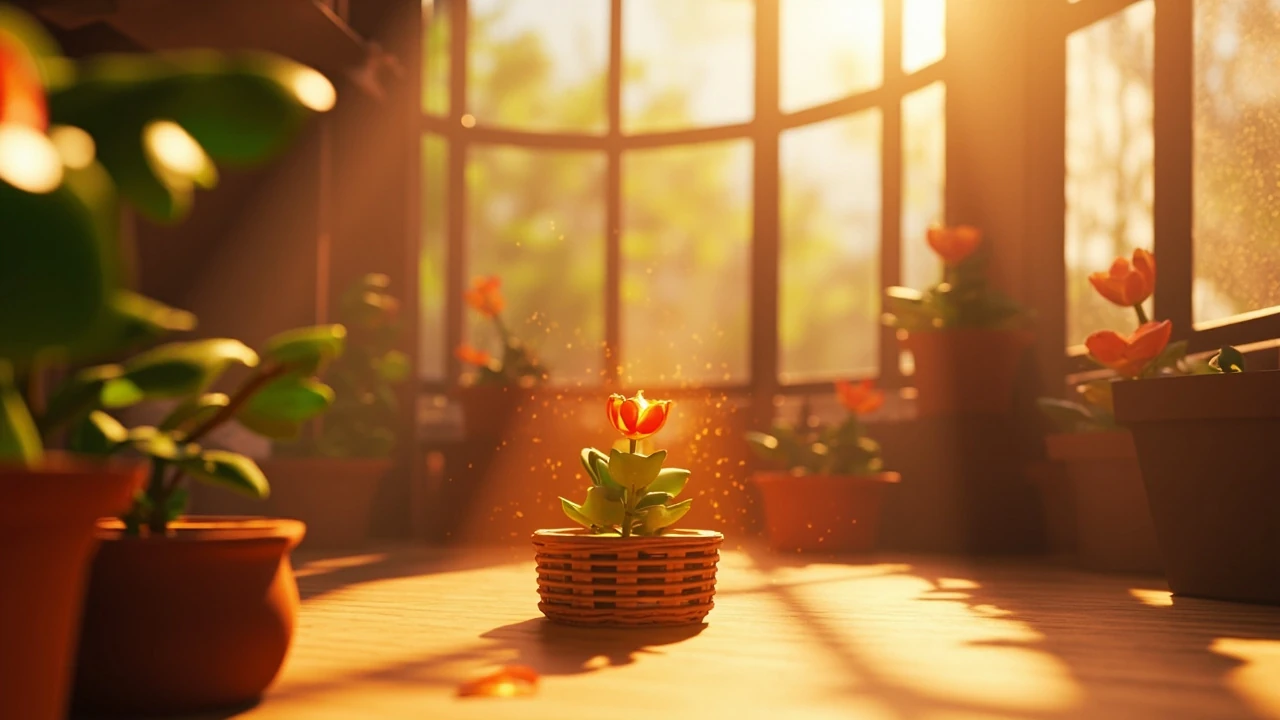
A burning bud is a prismatic, permanent seed in the Roblox farming sim Grow a Garden, added on July 5, 2025 as part of the Prehistoric Update. It belongs to a small tier of crops that keep producing after their first harvest, which is why experienced players track its restock windows the way other games track rare spawns. The seed itself looks like a small ember-wrapped flower, and the matured plant yields glowing orange blooms that can be sold or processed through luck-based mechanics. Because the source for this article is the verified Grow a Garden wiki page, every price, percentage, and mechanic below is grounded in that page rather than community rumor.
Two traits explain most of the interest. First, the burning bud is permanent, so it does not disappear from a player’s garden after one harvest cycle. Second, it is a prismatic seed, which places it in the same rarity bracket as other late-game crops that either cost a great deal of in-game currency or appear only when the rotating shop lines up. Together, those traits turn the burning bud into both a status object and a reliable long-term income source, depending on how a player uses the lucky harvest mechanic that comes with it.
For a new or returning player, the practical questions are simple. How do you actually get one, how much does it cost, and what should you do with it once it is planted. The rest of this article works through those questions, then adds the mechanics and the edge cases that are easy to miss until a player has watched the seed fail to restock for several in-game days. None of the advice here relies on speculation about future updates, and any number that could change with a later patch is flagged where it appears.
How to get burning bud in Grow a Garden
There are three documented paths to a burning bud, and they differ sharply in cost, time, and luck. The first two are direct purchase routes, and the third is a pet-based route that depends on chance. Each route has a clear tradeoff, and the source material makes it possible to compare them on the same scale: how much you spend, how long you wait, and how much of the result depends on random rolls.
Buy it from Sam’s Seed Shop with Robux
Sam’s Seed Shop rotates its stock, and the burning bud appears there as a real-money item. According to the verified Grow a Garden wiki entry, the direct Robux price is 915 Robux per seed. For players who already fund their Roblox account, this is the most predictable route because it does not depend on restock timing or hatching odds. The trade is that the cost is paid in real currency rather than earned in-game, which means a player who is not already buying Robux will feel the expense more sharply than a player who treats Robux as a regular subscription.
Buy it with Sheckles when stock allows
When the burning bud shows up in the rotating seed stock, it can also be bought with the in-game currency Sheckles. The wiki entry lists the Sheckles price at 40,000,000 per seed. That number is large enough that most players treat it as a savings goal rather than an impulse buy, and the cost is one of the reasons the burning bud is considered a long-term investment even among players who already have a healthy farm. Players who have not built a steady Sheckle income should treat the figure as a planning target, not a number to grind toward in a single session.
Use pets to dig up or duplicate seeds
The third option is not a guaranteed path. The wiki notes that two specific pets, the Golden Lab and the Dog, can dig up seeds at random, and that a Red Fox can enter another player’s garden and duplicate a seed rather than steal it. All three of these actions are governed by chance, and the chance of any of them producing a prismatic seed such as the burning bud is described in the source as “incredibly unlikely.” For most players, pet duplication is a backup plan that pays off only after many attempts, but it is the only documented route that does not require either Robux or 40 million Sheckles, which is exactly why it stays in the conversation even though the odds are poor.
| Method | Currency or cost | Reliability | Best for |
|---|---|---|---|
| Robux purchase from Sam’s Seed Shop | 915 Robux per seed | High when the item is in stock | Players who want a guaranteed route |
| Sheckles purchase from Sam’s Seed Shop | 40,000,000 Sheckles per seed | High only when the seed is in rotating stock | Long-term savers and big farms |
| Pet digging with Golden Lab or Dog | Pet ownership plus time | Low and luck-based | Players with patience and existing pet setup |
| Pet duplication with Red Fox | Pet ownership plus a friend’s burning bud | Low and depends on another player | Cooperative play with friends |
What makes the burning bud a prismatic seed
Grow a Garden sorts seeds into rarity tiers, and the prismatic tier sits near the top of that ladder. The rarity affects three things: how often the seed appears in rotating stock, how expensive it tends to be when it does appear, and which lucky harvest outcomes the matured plant can produce. A prismatic seed is not the rarest object in the game, but it is rare enough that a player who owns one usually built the rest of their farm around it, because the rest of the economy is tuned around cheaper tiers that pay back faster.
The burning bud is also classified as a permanent seed. That classification matters because Grow a Garden contains two broad categories of crop. Single-harvest plants yield their produce once and then are gone, while permanent seeds can be harvested repeatedly. A burning bud planted today is expected to still be in the garden next week, which is the property that makes the 915 Robux or 40 million Sheckles price defensible for players who plan to keep playing. A player who plans to walk away from the game after a season will get much less out of the seed than a player who treats it as a fixture.
Finally, the burning bud is a multi-harvest plant, which the wiki describes as a seed that “you can keep in your garden for as long as you like and continue to pick flowers from it to sell.” Multi-harvest and permanent are sometimes treated as the same idea in casual play, but they describe different things. A multi-harvest plant produces more than one round of crops. A permanent plant does not vanish after its final harvest. The burning bud satisfies both, which is why it behaves as a long-term fixture rather than a one-off investment, and why the lucky harvest mechanic compounds in value the longer the plant stays in the ground.
The lucky harvest mechanic and the role of a Snail pet
Once a burning bud is planted and starts producing flowers, the relevant mechanic shifts from acquisition to harvesting. Each time a player picks a flower from a burning bud, the game rolls a chance to trigger a lucky harvest. A lucky harvest rewards the player with a free seed without spending Sheckles or Robux, which is the long-term payoff that makes the burning bud attractive even at its high entry cost. The mechanic is the reason a player who already has a burning bud should not sell it off after a few cycles just to chase a faster Sheckle income, because the lucky harvest stream is what differentiates this seed from a cheaper multi-harvest plant.
According to the verified wiki entry, having a Snail as a pet increases the chances for a lucky harvest. The Snail is not the only pet that affects the game, but it is the one explicitly connected to lucky harvest rolls in the source. A player who already owns a Snail should keep it assigned to the plot where the burning bud grows, because the lucky harvest chance compounds over many harvests. A player who does not own a Snail can still get lucky harvests, but at the base rate, and the difference between the base rate and the boosted rate becomes visible only after a player logs enough cycles to see the average settle.
| Setup | Lucky harvest chance | How to reach it |
|---|---|---|
| Burning bud only | Base rate | Plant the seed and harvest on the normal schedule |
| Burning bud plus Snail pet | Increased rate per the wiki | Place a Snail on the same plot before harvesting |
| Burning bud plus a high-luck team buff | Higher but unverified for this seed | Combine with event buffs only if the event description confirms the effect |
Pet roles in the burning bud economy
Pets show up in two places in the burning bud economy. They can help you acquire a seed in the first place, and they can help you extract more value from the plant after it is in the ground. The two roles are easy to mix up, because the wiki page describes them in the same section, but they happen at different points in the lifecycle of the seed. Treating them as separate problems makes both easier to plan for, because the pets that help with acquisition are common and cheap, while the pet that helps with harvesting is rarer and worth placing carefully.
Pets that help you acquire a burning bud
Three pets are mentioned in the source as relevant to acquisition. The Golden Lab and the Dog can dig up seeds at random, and the Red Fox can duplicate another player’s seed. The wiki notes that both the Golden Lab and the Dog can be hatched from a Common Egg, with a 33.33 percent hatch rate per Common Egg, and that the Common Egg itself has a 99 percent chance of spawning in the egg shop. That stack of probabilities is what makes pet-based acquisition feel more accessible than it actually is, because hatching a Golden Lab or Dog is cheap and common, but the prismatic tier of the seeds they can dig up is not. The Red Fox route adds a second layer of dependency, since the duplication only works if another player already has a burning bud in their garden, which means it is really a cooperative play route dressed up as a solo mechanic.
Pets that help you farm a burning bud
Once the burning bud is in the ground, the Snail is the pet the wiki names as improving lucky harvest outcomes. Other pets can affect the rest of a farm, but the source material does not extend the lucky harvest bonus beyond the Snail. For a player whose only goal is to maximize the value of a single burning bud, the practical advice is to keep a Snail on that plot and treat other pet bonuses as secondary. A player who owns a Snail but also runs a wide farm with several prismatic seeds should think about which plot gets the Snail at any given moment, because the bonus is plot-specific in most setups of this type.
Cost, value, and whether the burning bud is worth it
The price tag on a burning bud is unusual for a Roblox farming sim, and it is worth stepping through the economics before spending either Robux or 40 million Sheckles. The two direct prices are not the same kind of commitment, and they appeal to different kinds of players. A player who already buys Robux is effectively converting discretionary spending into a permanent in-game asset, while a player who buys with Sheckles is converting in-game time into a permanent in-game asset. The end state is the same, but the cash flow looks completely different.
The 915 Robux price is a real-money cost, which makes it predictable but also makes it the most expensive option for a player who is not already spending on Roblox. For a player who already buys Robux regularly, 915 Robux is a flat expense that converts into a permanent asset inside one specific game. The 40 million Sheckles price is an in-game cost, which means it depends entirely on how the player has been playing. A player who runs a large, optimized farm can save that amount in a reasonable window. A new player cannot, and the gap between those two situations is the single biggest reason the burning bud tends to belong to long-tenured accounts.
The expected return on a burning bud comes from two streams. The first is the sale of the flowers it produces, which is straightforward and scales with the size of the farm. The second is the lucky harvest mechanic, which converts harvests into free seeds over time. The second stream is where the Snail pet matters most, because it raises the rate at which free seeds are produced without any additional Sheckle or Robux cost. A player who plans to use the burning bud as a lucky harvest engine should also plan to leave the plant in the ground for many cycles, because a single harvest window is not enough to see whether the seed is paying for itself.
| Investment path | Upfront cost | Ongoing cost | Best return driver |
|---|---|---|---|
| Robux purchase | 915 Robux | None documented | Lucky harvest rolls with a Snail pet |
| Sheckles purchase | 40,000,000 Sheckles | Time to gather the currency | Lucky harvest rolls with a Snail pet |
| Pet digging or duplication | Time and pet upkeep | Luck-based, no fixed cost | Cooperative play with friends who own burning buds |
Whether the burning bud is worth it depends on how long a player plans to keep playing. A player who intends to log in regularly for several in-game seasons will treat the seed as an investment that pays back through lucky harvest rolls. A player who logs in occasionally will get less value from the lucky harvest side and may not see enough flower sales to justify the upfront cost. The honest read of the source material is that the burning bud is a long-horizon seed, and that a player who treats it like a short-term purchase is the one most likely to feel like they overpaid.
Step-by-step: planting and harvesting a burning bud
- Acquire the seed through one of the three methods described above, and make sure the burning bud is in your seed inventory before you start.
- Choose a plot in your garden that is close to your Snail pet, if you own one, because the lucky harvest bonus applies per plot rather than per garden.
- Plant the burning bud in that plot and confirm the plant is registered as a multi-harvest, permanent crop, which the in-game tooltip should show.
- Assign your Snail pet to the same plot before you begin harvesting, since the source describes the lucky harvest chance as tied to the Snail’s presence on the harvest.
- Harvest the flowers on the schedule the game displays for the burning bud, and check the harvest result for a lucky harvest notification.
- If the lucky harvest fires, the game will add a free seed to your inventory. If it does not fire, sell the flowers as normal and continue harvesting on the next cycle.
- Track your lucky harvest rate over a few cycles, and adjust your pet or plot layout only if the rate is noticeably below your expectation for a Snail-boosted setup.
Players who skip the Snail step often assume the lucky harvest is broken, when in fact the rate they are seeing is the base rate. A short log of harvest outcomes across ten or twenty cycles is usually enough to confirm whether the pet is in the right place and the plot is producing as expected. The log is also useful when a player wants to compare a Snail-boosted plot against a baseline plot, because the difference is rarely obvious in a single cycle and only becomes visible over time.
Comparing the burning bud to other prismatic seeds
It helps to place the burning bud next to the other prismatic seeds in the same tier, because the price and the lucky harvest mechanic are easier to evaluate when the alternatives are visible. The source does not give a full ranked list of prismatic seeds, but it does place the burning bud firmly in that tier and describes the pet-based prismatic outcomes as “incredibly unlikely,” which sets a reasonable expectation for how the seed compares to its peers in the same rarity bracket.
Players who already own one or two prismatic seeds will recognize the pattern. The entry cost is high, the rotation window is narrow, and the long-term value is concentrated in the lucky harvest mechanic rather than in raw flower sales. A player who treats the burning bud as just another flower in the ground will underuse it, while a player who plans the plot, the pet placement, and the harvest schedule around the seed will get noticeably more out of the same investment. The difference between those two play styles is usually the difference between feeling like the seed was overpriced and feeling like it earned its place in the garden.
| Trait | Burning bud | Typical single-harvest flower | Cheap multi-harvest plant |
|---|---|---|---|
| Rarity tier | Prismatic | Common or uncommon | Common |
| Entry cost | 915 Robux or 40,000,000 Sheckles | Low Sheckle cost | Low Sheckle cost |
| Permanent in garden | Yes | No | Yes for many tiers |
| Lucky harvest interaction | Documented with Snail boost | Rare or undocumented | Lower base rate |
Common mistakes when working with a burning bud
- Treating the 40 million Sheckles price as a baseline. The Sheckles price is the in-game fallback, not the suggested price for new players, and a player who has not built up a steady Sheckles income should plan their savings before attempting the purchase.
- Assuming pet duplication is reliable. The Red Fox can duplicate a seed, but the chance of a prismatic seed being the target of that duplication is not documented, and the duplication still requires another player to own a burning bud in the first place.
- Forgetting to assign the Snail pet to the burning bud’s plot. The lucky harvest bonus is plot-specific in most farming sims of this type, and leaving the Snail on a different plot will silently reduce the bonus without any error message.
- Planting the burning bud in a remote corner of the farm. The seed is expensive enough that it deserves a visible, well-protected plot, and burying it in a corner increases the risk of missing a harvest cycle.
- Confusing the Lucky Harvest mechanic with a guaranteed drop. Lucky harvest is a chance, not a promise, and the source describes the prismatic tier of related seeds as “incredibly unlikely” in the pet context, which sets the right expectation for what lucky harvest is and is not.
- Selling the burning bud early to chase Sheckles. A player who unplugs a burning bud after a few cycles gives up the lucky harvest stream that justifies the entry cost, and the resale value rarely covers the original price.
How the burning bud fits into a wider farm strategy
The burning bud works best as a centerpiece rather than as a side crop. A farm that centers on this seed usually has a smaller number of expensive, permanent plants, with cheaper multi-harvest crops handling the day-to-day Sheckle income. The expensive plants pay back slowly through lucky harvest rolls, and the cheaper plants keep the farm liquid in the meantime. Splitting the garden that way also makes it easier to keep the Snail on the plot that needs it, since the Snail is not required on the cheaper crops.
Players who run a wide farm with many plots should think about which plot gets the Snail on any given cycle, because the bonus is per plot rather than per garden. A simple rotation that puts the Snail on the burning bud’s plot for every harvest window is enough to keep the bonus active without overthinking the rest of the farm layout. The wider farm strategy is a separate question from the burning bud itself, but the two are linked, because the seed only makes sense in a garden that has room for a long-term fixture.
What the source does and does not say about the burning bud
The verified wiki page gives prices, hatch rates, lucky harvest mechanics, and a few pet interactions, but it does not give a precise lucky harvest percentage, a documented cooldown between restocks, or a guaranteed drop table for the prismatic tier. Anything that goes beyond those numbers is community inference rather than documented fact, and it should be treated as such. A reader who wants to plan around a specific percentage should wait for a patch note or a developer statement, because the source material is intentionally vague on the exact rate.
For practical purposes, the most useful numbers to remember are the two entry costs, the 33.33 percent hatch rate for the Golden Lab and Dog from a Common Egg, and the 99 percent spawn rate of the Common Egg itself. Those four numbers are enough to compare the three acquisition routes on the same scale, and they are enough to decide whether the burning bud fits a given player’s budget. The lucky harvest mechanic is best treated as a long-term bonus rather than a near-term payoff, because the source does not support any other framing.
Frequently asked questions
What is a burning bud in Grow a Garden?
A burning bud is a prismatic, permanent seed added to Grow a Garden on July 5, 2025 as part of the Prehistoric Update. It produces glowing orange flowers that can be sold and can trigger lucky harvest rolls when picked.
How much does a burning bud cost?
The verified costs are 915 Robux when bought directly with real money, or 40,000,000 Sheckles when bought with in-game currency. The Sheckles price is only available when the burning bud is in the rotating shop stock.
Is the burning bud permanent or single-harvest?
It is a permanent, multi-harvest seed. The plant stays in the garden after its first harvest and continues to produce flowers, which is why it is treated as a long-term investment rather than a one-off crop.
How do you increase lucky harvest chances on a burning bud?
The wiki names the Snail as the pet that improves lucky harvest chances. Place the Snail on the same plot as the burning bud before harvesting, and the chance of receiving a free seed from a lucky harvest roll is higher than the base rate.
Can you get a burning bud without spending Robux?
Yes, but only with luck. The Golden Lab and Dog can dig up seeds, and the Red Fox can duplicate seeds from other players’ gardens. The odds of a prismatic seed such as the burning bud being involved in any of those actions are described as very low.
Where do you buy a burning bud?
Both documented purchase routes go through Sam’s Seed Shop, which is the rotating seed vendor in Grow a Garden. The Robux price is always available when the item is in stock, and the Sheckles price is available only when the rotating shop has the seed.
Do you need a Snail pet to benefit from lucky harvest?
No, lucky harvest still fires at the base rate without a Snail, but the wiki states that the Snail increases the chance. Players who already own a Snail should keep it assigned to the burning bud’s plot, and players who do not own one should not expect the same rate.
Why is the Sheckles price so high compared to other seeds?
The prismatic rarity tier places the burning bud near the top of the seed ladder, and the source describes the Sheckles price as 40,000,000. That price reflects both the rarity of the seed and the multi-harvest, permanent nature of the plant, which is intended to pay back over time rather than on a single harvest.
Is the burning bud the same as a regular flower seed?
No. Regular flower seeds are typically single-harvest or low-rarity multi-harvest plants, while the burning bud is classified as a prismatic permanent seed. The visual effect, the lucky harvest mechanic, and the cost all separate the burning bud from the standard flower tier in Grow a Garden.
Can the burning bud disappear from your garden?
The source describes the burning bud as a permanent seed, which means it remains in the garden after the first harvest. The game can still remove it through other mechanics such as plot clearing, but routine harvesting should not consume the plant itself.





Leave a Reply