
Cabin Crew Simulator codes and how redemption actually works
Codes in Roblox experiences such as Cabin Crew Simulator are short text strings that a developer or publisher releases to grant in-game rewards. Rewards typically include coins, cosmetics, currency boosts, or small progression items that would otherwise take repeated play sessions to earn. A code is not a cheat or a hack: it is a deliberate gift from the game’s creator, usually issued to celebrate a milestone, compensate for an outage, or reward a community event.
For a player, the practical value of cabin crew simulator codes is real but bounded. They can shave hours off a grind, unlock a cosmetic early, or give a fresh account a head start. They are also temporary, server-conditional, and frequently misunderstood, because Roblox code pages and YouTube videos often recycle expired entries as if they still work. This article explains the redemption mechanism, where active codes tend to appear, how to validate a result, and what to do when a code refuses to cooperate.
The focus here is on the redemption flow, the developer side of issuing codes, and the practical checks a player or an aspiring Roblox creator should run before treating any list as current. If you build or publish experiences on Roblox, the same mechanism matters for your own projects, so the article also covers how Cabin Crew-style reward drops are implemented, validated, and retired. The verified support for the broader music act behind the title is documented separately on the Cabin Crew Wikipedia entry, which is the only external reference used in this guide.
What a Roblox “code” really is
On Roblox, the word “code” can mean two related but distinct things. The first is a promo code distributed by Roblox itself for limited platform-wide rewards such as avatar items. The second, and far more common in Cabin Crew Simulator, is a game-specific code published by the experience’s developer for that title only. Game-specific codes are entered inside the experience, not on the Roblox website.
Internally, those codes are usually short identifiers paired with a reward payload in a remote configuration or a DataStore entry. When a player types a code into the in-game redemption field, the client sends the string to a server script that checks a list of valid codes, decides whether the code is still active, whether the player has already redeemed it, and then grants the reward. Because the check is server-side, a client cannot fake a reward by editing local values; the server is the source of truth.
Why game-specific codes matter for players
Game-specific codes give players a way to access free content without spending Robux and without grinding for currency. For a tycoon or simulator-style experience like Cabin Crew Simulator, the most common rewards are:
- In-game currency such as coins or gems, which accelerate the purchase of upgrades.
- Multiplier or boost items that speed up earnings for a fixed duration.
- Cosmetics such as uniforms, hats, or accessories that fit the cabin crew theme.
- One-time title or badge rewards that mark an account as a returning supporter.
The exact reward set depends on what the developer decided to gate behind a code. Some codes are meant to be widely used, while others are intentionally narrow, such as a code only valid for the first hundred players or only on a specific server region. A code can also be a soft marketing tool: the developer uses it to drive a burst of returning players after a quiet patch, then retires it once the audience response has been measured.
Why “Roblox promo code” is a different thing
It is easy to conflate the two code systems, and many list pages do exactly that. A Roblox promo code is issued by Roblox the platform, redeemed at the official redemption site, and tied to a specific event such as a sponsorship or a movie tie-in. A Cabin Crew Simulator code is local to the experience, redeemed through an in-game menu, and managed by the developer. The two systems do not share redemption endpoints, so a working Roblox promo code says nothing about whether a given game code is active.
Where Cabin Crew Simulator codes get published
Active codes for Cabin Crew Simulator normally appear in a small number of predictable places. Before redeeming any string you see online, it helps to understand the difference between an authoritative source and a secondary aggregator.
| Source | Authority | Typical lag | Risk of outdated entries |
|---|---|---|---|
| Developer’s official Roblox group | Primary | Minutes | Very low while the group is monitored |
| Developer’s official Discord server | Primary | Minutes to hours | Low if the announcement channel is pinned |
| Experience’s social media account | Primary | Hours | Low when posts are dated |
| Aggregator sites and YouTube videos | Secondary | Days to weeks | High, because lists are rarely pruned |
| Generic “Roblox codes” pages | Secondary | Days to weeks | High, often mixing multiple games |
The pattern above repeats across most Roblox simulators, and it is the reason Cabin Crew Simulator players frequently report that a code “doesn’t work.” In most cases the code worked when it was first posted; the list they copied it from simply never removed it after the developer expired it. A secondary pattern is the inverse: a list updates a code string but does not actually retire it on the server, so the page looks fresh while the experience still rejects the entry. Cross-checking against a primary source is the only reliable defence against that drift.
How to tell whether a code is still active
There is no public API that tells you whether a specific code in a specific experience is still valid, so you have to triangulate. The most reliable signal is the timestamp of the announcement: if the developer’s group or Discord post is recent and the code has not been marked as expired, it is more likely to still work. Conversely, a YouTube video that was uploaded months ago and has not been updated should be treated as suspect until proven otherwise.
For a quick read, look for three small but consistent details in the source post:
- An explicit expiry phrase such as “while supplies last” or “until the next update.”
- A clear date, either in the post itself or in the surrounding social media thread.
- A reply or pin from the developer stating that the code is still active.
If none of those signals are present, treat the code as potentially expired and try it last, after you have used anything with a confirmed recent timestamp. A practical habit is to screenshot the source post alongside the redemption result, so when a code fails a week later you can see whether the post was updated or simply left in place.
How to redeem a code inside Cabin Crew Simulator
The redemption flow in Cabin Crew Simulator follows the standard pattern used by most Roblox simulator experiences. The exact button labels can change as the developer updates the UI, but the underlying sequence is stable enough to follow even when the interface is rearranged.
Step-by-step redemption
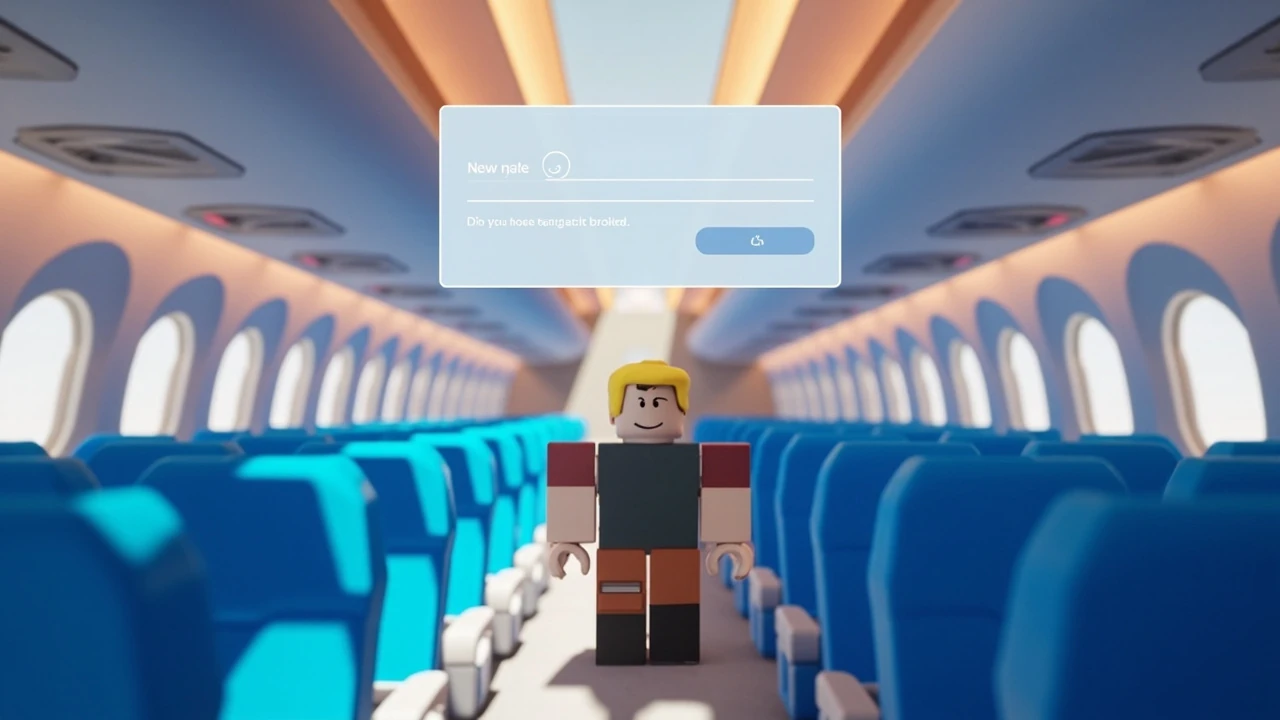
- Launch Cabin Crew Simulator from Roblox and wait for your avatar to finish loading into the cabin environment.
- Locate the in-game menu, usually opened with an icon on the side of the screen or through a button labelled Codes, Rewards, or Settings.
- Find the text field labelled Code or Promo, tap it, and type the code exactly as it appears in the source post, including hyphens and capital letters.
- Press the confirm button, which is often labelled Redeem, Claim, or Get Reward.
- Watch for a confirmation message in the same menu, then check your inventory or currency counter to confirm the reward actually arrived.
Most experiences confirm a successful redemption with a pop-up or a small banner. If nothing happens, the code was either rejected or the request was throttled. The next section covers the diagnostic steps in that case. On touch-screen devices the redeem button can sit below the keyboard, so if the button appears unresponsive, dismiss the keyboard and try again before assuming the code itself is the problem.
Common error states during redemption
Roblox games do not always surface a precise error code, so a failed redemption is often a single “Invalid code” message that does not tell you why. Mapping that message back to a likely cause is more useful than simply trying again.
| Symptom | Likely cause | What to try |
|---|---|---|
| “Invalid code” with no further detail | Typo, extra space, wrong game | Retype from a fresh source, not a copy-paste of an old list |
| Code accepted, no reward appears | Server lag or pending state | Re-enter the cabin, then check the inventory or currency tab |
| “Already redeemed” or silent rejection | One-time-use per account | Confirm on a different account only as a test, never to exploit |
| Field is greyed out or missing | Experience is updating | Wait for the next patch, then recheck the menu |
| Code field is present but the button does nothing | Connection issue or throttling | Rejoin the server and try once more |
Each of these is a server-side decision. The client is merely asking the question; the experience’s code service answers it. That is also why two players on the same code can see different outcomes: one account may already be on the redeemed list, while the other is still eligible. A handful of experiences also gate redemptions by account age, so a brand-new account created the same day may be silently rejected even with a valid code.
The developer side: how Cabin Crew-style codes are implemented
For Roblox creators who want to learn from the pattern that experiences like Cabin Crew Simulator rely on, the implementation is more straightforward than it looks. A small set of server-side primitives, used carefully, is enough to support a complete code-driven reward system. Background reading on the broader Cabin Crew naming and how the term has been used across media is available on the Cabin Crew Wikipedia page, which provides useful context for the title and any branding decisions you may make for a similar experience.
Storing the code list
The simplest approach is a Lua table inside a server Script that maps code strings to reward definitions. A minimal example, written as illustrative pseudocode rather than a copy-paste production script, looks like this:
local VALID_CODES = { ["THANKS100"] = { kind = "coins", amount = 100 }, ["WELCOME"] = { kind = "boost", id = "earn_x2", duration = 600 } }
For larger projects, developers typically move the list out of the script and into a configuration source such as a MemoryStore, a DataStore entry, or an external service that the game polls on startup. The reason is operational: a hard-coded table forces a deploy every time a code is added or expired, while a remote configuration can be updated without a Roblox update. A second benefit is auditability, because an external configuration source is easier to back up, version, and roll back when a code is retired by mistake.
Validating the redemption
Once a code string reaches the server, the script performs four checks in order:
- Existence: is the string present in the active list at all?
- Expiry: is the current server time within the code’s active window?
- Eligibility: has the requesting user already redeemed this code on this account?
- Capacity: for capped codes, has the global redemption limit been reached?
Only if all four pass does the script grant the reward and persist the redemption record. If any check fails, the script returns a generic rejection so that the client cannot use the error text to probe the system. Returning a uniform error is a small but important defence, because it prevents a client from inferring which check failed and from iterating through possible codes to find one that slips past a particular guard.
Persisting redemptions across sessions
Because players leave and rejoin, the server has to remember who has redeemed what. The standard pattern is a DataStore entry per user that stores a list of redeemed codes, with the list loaded on join and updated after every successful grant. A well-designed system also stores a small per-code redemption counter, so a developer can see how many times a code has been used and retire it when the desired audience has been reached.
Two practical limits deserve attention. First, DataStore requests are throttled, so batching reads and writes at the start and end of a session is safer than spamming requests on every redemption. Second, redemption lists grow without bound unless you prune them, which means a long-running experience needs a periodic cleanup that drops entries older than the longest active code’s lifetime. A third limit, often missed, is the DataStore key length: once a user has redeemed many codes, the per-user record can approach the size cap, so storing short code identifiers and a separate “redeemed” flag is more compact than storing full reward payloads.
Expiry, retirement, and why “old” codes stop working
Codes do not break randomly. They stop working because the developer has deliberately ended them. Understanding the lifecycle helps a player avoid frustration and helps a creator design cleaner launches. It also explains why two players who joined the experience in the same week can have very different code lists in their screenshots: one of them joined before a code was retired, the other joined after.
Reasons developers retire codes
Developers end a code for one of several common reasons, and recognizing the pattern can save you from chasing a code that was never going to work for you.
- Time-boxed campaigns: codes tied to a launch, holiday, or community event that has ended.
- Cap reached: codes with a maximum number of redemptions, after which they are turned off.
- Version drift: codes tied to a specific game version become invalid after a major update rebalances the economy.
- Abuse mitigation: codes that have been leaked publicly are sometimes retired early to protect the value of the remaining rewards.
- Operational cleanup: a developer rotates a new code in and removes an older one to keep the active list short.
None of these reasons is visible to a player, which is why an apparently random “Invalid code” message is the default outcome for any string that has been retired. In practice, abuse mitigation is the most common cause of a sudden retirement, because a single viral video can drive tens of thousands of redemptions in a few hours and exhaust the developer’s reward budget for the campaign.
Spotting fake or recycled code lists
The Roblox code ecosystem is full of pages that promise working cabin crew simulator codes and then list a mix of expired entries, codes for unrelated games, and strings that never existed. Treating any list as a starting point rather than a source of truth is the safer habit. A few checks go a long way.
Red flags in a code article or video
The clearest signals that a list has not been maintained are visual rather than technical. Look at the page itself rather than just the codes on it.
- No visible date, or a date that is months old with no update note.
- Comments or replies that contradict the list, with players saying the codes do not work.
- Codes in a different format than the developer normally uses, such as unusually long strings or all-lowercase entries mixed with all-uppercase ones.
- Identical lists appearing on multiple unrelated sites, which usually means a copy-paste network.
- Codes that match the format of a different game on Roblox, suggesting the author scraped a wider list without filtering.
If a page shows several of these signals, do not trust it. Cross-check any code you find there against the developer’s group or Discord before redeeming, and prefer the most recent confirmed post. A useful habit is to keep a private note of which code came from which source, because when the next round of codes is published, the source that was right last time is usually right again.
How players can track new codes reliably
For a player who wants to stay current, the simplest reliable workflow is small and repeatable. It is less about checking many sources than about treating a few sources as canonical.
- Join the developer’s official Roblox group, because the group wall is where the most authoritative announcements tend to appear first.
- Join the developer’s Discord if one exists, and pin the announcement channel so new codes are easy to scan.
- Bookmark a single trustworthy secondary source as a backup, ideally one that timestamps its updates and removes expired entries.
- Redeem promptly. Codes with caps or limited windows are more useful the earlier you claim them, and you also avoid the disappointment of an expired code later.
This four-step routine is more effective than chasing every YouTube compilation, because it focuses on the primary sources the developer actually uses to communicate. It also reduces the risk of being scammed, because every step in the routine happens inside an official channel rather than a redirect chain.
Safety, scams, and the limits of “free rewards”
Codes themselves are safe, but the ecosystem around them is not. The most common abuse pattern is a phishing site that imitates a Roblox login page and asks the player to “verify” before revealing the codes. No genuine code page requires your password, and no Roblox redemption field lives outside the experience itself. A second pattern is a shortened link that resolves to a domain unrelated to Roblox: even if the page looks polished, the URL bar is the only reliable signal, so always expand short links before signing in.
Another common pattern is a video that asks you to complete a survey, install an app, or subscribe to a channel before “unlocking” the code list. The codes in those videos, if they exist at all, are almost always expired. The unlock step is the actual product: your attention, your data, or both. Treat any gate in front of a code as a strong signal that the code is not the point. A related scam uses a fake “code generator” that claims to produce working codes on demand; the output is always a string the developer never issued, and the page exists only to harvest account credentials or push malware.
For creators, the same caution applies in reverse. If you publish codes through your own group, make sure the URL in your post is the canonical one. Players will follow shortened or impersonating links, and a single bad link can erode trust in a developer faster than any reward can repair it. Pinning a short “how to redeem” message at the top of the announcement channel also helps, because it gives players a single place to confirm the official flow before they try anything risky.
Troubleshooting when nothing works
When you have tried every code on a list and none of them work, the issue is usually one of three things. Working through them in order saves time and avoids the trap of blaming the game for an upstream problem.
Check the obvious first
Start with the simplest possible cause. Roblox is a global platform and small differences in input, language, or device can all change the result.
- Confirm you are inside Cabin Crew Simulator and not in a different experience with a similar name.
- Type the code manually instead of pasting it, in case the source contains an invisible character.
- Check that your network connection is stable; a weak connection can produce a silent rejection.
- Rejoin the experience to force a clean state, then try the redemption again.
Move on to environment causes
If the basics pass, the cause is more likely to be on the developer’s side. A live-ops change, a server migration, or a feature flag can all disable the redemption system without any visible message. A short, polite check of the developer’s group or Discord usually clarifies whether redemption is temporarily down, which is far more useful than redeeming the same code twenty times. In some cases, a regional DataStore outage can prevent a redemption from persisting even when the server accepts the code, so waiting an hour and retrying is sometimes the correct answer.
Finally, accept that the code is gone
If the developer has retired the code, the right response is to wait for the next one. Sending repeated redemption requests will not help, and editing local files will not work, because the redemption check is server-side. Treat the time as an opportunity to enjoy the game’s normal progression, which is the only path that is guaranteed to work regardless of the code schedule. If the developer has paused the entire code system, that is also useful information: it usually signals a bigger update in the pipeline, and the next wave of codes is likely to be tied to that update rather than to a one-off event.
Frequently asked questions
What are Cabin Crew Simulator codes used for?
They grant in-game rewards such as coins, boosts, or cosmetics that the developer chooses to distribute for free. They are a way to thank the community, celebrate milestones, or give new players a small head start without changing the underlying economy.
Where do I enter Cabin Crew Simulator codes?
Inside the experience itself, through an in-game menu, usually labelled Codes, Rewards, or Settings. The redemption field is not on the Roblox website and is not part of your account settings, so any page asking you to log in to redeem a code is not legitimate.
How often are new codes released?
There is no fixed schedule. Most simulator experiences release codes around updates, milestones, or community events. Some developers post a new code weekly, while others post a handful each month, so the rhythm depends on the team’s live-ops plan.
Why does a code say “Invalid” even though I copied it from an official-looking list?
That code has almost certainly been retired. Lists on YouTube or aggregator sites are rarely pruned, so an entry that was valid when it was first posted can be invalid months later. Cross-check any code against the developer’s group or Discord before treating it as current.
Can I use a code more than once on the same account?
Most codes are single-use per account by design. The server records the redemption so the same account cannot claim the same reward twice. Some special codes are reusable for a short window, but that is the exception rather than the rule.
Are codes safe to redeem?
The codes themselves are safe. The risk is in the surrounding ecosystem, where phishing pages and survey scams imitate real code lists. Never enter your Roblox password on a third-party site, and treat any gate in front of a code list as a strong warning sign.
Do codes work on every platform?
Yes, redemption is account-bound rather than device-bound, so a code redeemed on PC applies to the same Roblox account on mobile, console, or VR. What can vary is which rewards appear in your inventory, because some items are platform-specific in how they render.
What is the difference between a game code and a Roblox promo code?
A game code is published by the developer of a specific experience and is redeemed inside that experience. A Roblox promo code is issued by Roblox itself for platform-wide items and is redeemed on the Roblox website. Cabin Crew Simulator codes are game codes, not Roblox promo codes.
How can I tell if a code is capped?
Look at the announcement. Developers usually state a cap explicitly, often in the form of “first 10,000 players” or “limited to 1,000 redemptions.” If the post does not mention a cap, the code is most likely unlimited within its active window.
What should I do if none of the codes work today?
Wait a few hours and check the developer’s group or Discord again. A working list of cabin crew simulator codes refreshes whenever the developer issues a new batch, so the right move is usually to wait for the next drop rather than to keep retrying the same list.
Practical next step
Before you redeem anything, open the developer’s official group and look for the most recent dated post. Use any code from that post first, then work backward through the most recently dated items on a secondary source. If a code does not redeem, treat the message as data: the code has been retired, and the next drop will arrive on the developer’s schedule, not yours.





Leave a Reply