
Grisham Pokémon Legends Z-A: who he is and why he matters
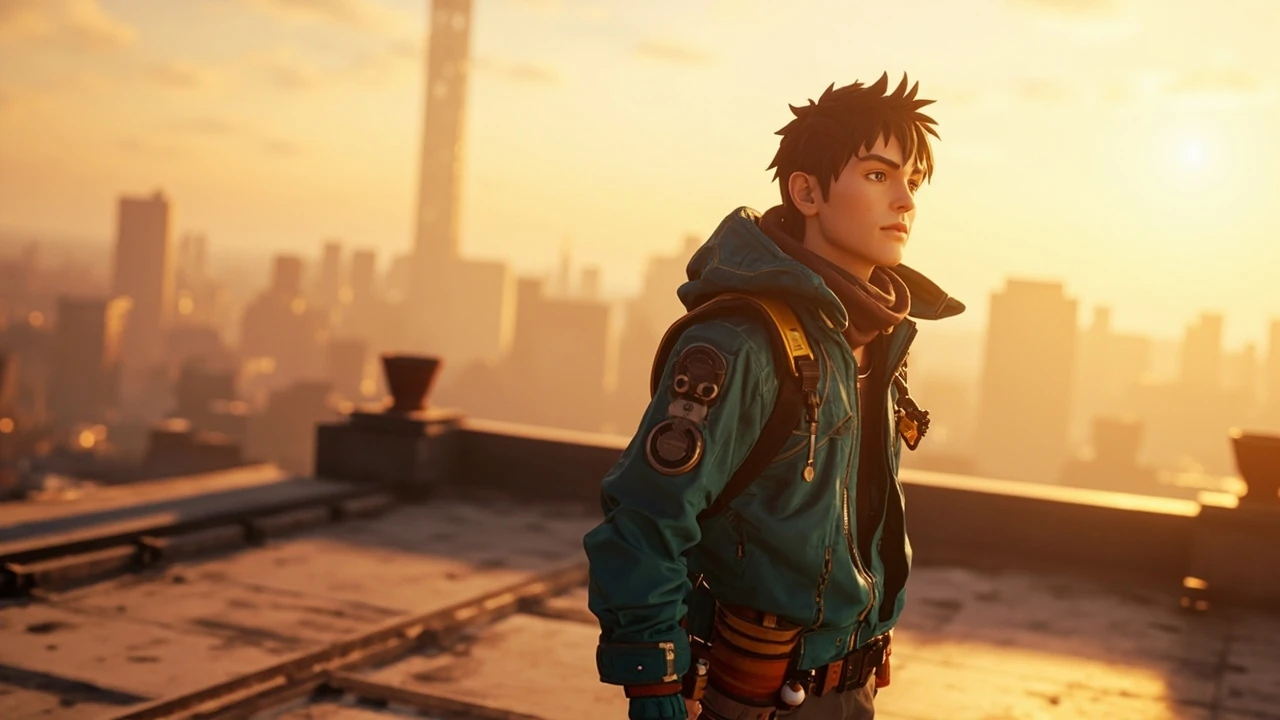
A character named Grisham appears in the pre-release material surrounding Pokémon Legends: Z-A, the mainline entry set in the reimagined Kalos city of Lumiose. He is presented as one of the principal human characters in the player’s circle, and the way The Pokémon Company and Game Freak have staged his appearances suggests a role that goes beyond a one-scene NPC. For players trying to plan a first playthrough, and for developers studying how a flagship handheld-and-console entry sets up its rival cast, Grisham is one of the clearest anchors for the game’s social structure around the player. The pre-release coverage so far includes key art, a slot in the central cast trailer, and at least one rooftop scene set on a Lumiose high-rise, which is the kind of staging that the series has historically reserved for rivals or near-rivals.
This article works through what is confirmed, what is reasonable inference, and what is still open. It treats Grisham as a character, a design artifact, and a narrative node, and it frames the discussion in terms a player can use to make early decisions and a developer can use to compare rival-design patterns against other flagship RPGs. The goal is a single, defensible reading of the character without overstating confirmed mechanics or padding the page with fan speculation. Where the official material is silent, the article names the silence instead of filling it with guesses.
Confirmed facts about Grisham so far
Before looking at interpretation, it helps to lay out the small set of facts that the official channels have actually shown. None of the items below rely on datamines, retail leaks, or unofficial translations.
- Grisham is a human character, not a Pokémon, and is depicted in the official key art and trailers alongside the player character and other Lumiose residents.
- He is associated with the city of Lumiose and is presented in promotional material as part of the central cast, not as a background NPC.
- His visual design uses a teal and gold palette, a research-themed outer jacket, and a single Poké Ball at the hip, which positions him as someone who travels with Pokémon rather than someone who studies them from a lab.
- He appears in story beats that the marketing has framed as competitive or contrasting with the player, suggesting a rival or foil role rather than a mentor role.
- His name follows the Western single-name pattern used for other Kalos-region human characters, indicating the localization team has integrated him into the existing Kalos naming convention rather than placing him as an outlier or cameo.
- His key art is composed in the same visual language as the player character, which usually signals a peer relationship rather than a mentor or authority relationship.
Those six points are enough to anchor a serious analysis. Everything else in this article is framed as design reading or narrative inference, with the limits of the evidence called out where they matter. The promotion cycle for a mainline entry also tends to add small details in the final weeks before launch, so the confirmed set above is the minimum a reader can rely on now and may grow over time.
How Grisham fits the Lumiose setting
Lumiose City in Pokémon Legends: Z-A is being rebuilt around a single urban area, with a stronger emphasis on vertical exploration, a daytime-night cycle, and a less railroady structure than earlier 3D entries in the series. The Lumiose of the Legends timeline is also a more compact social environment than the open routes of a region like Paldea, which means the cast around the player is denser and the rival cast in particular is more likely to bump into the player during routine play rather than only at story gates. The same vertical city also has a different pacing profile: elevators, plazas, and rooftop gardens replace the long walking routes that the earlier Kalos games used to pace rival encounters, which in turn changes how often a rival is visible without a battle attached.
Grisham’s design reflects that. A rival in an urban Legend-style game has to be plausible in the same public spaces the player uses, which is why his key art reads as a young adult trainer-researcher hybrid rather than the younger, school-uniform-coded rivals the series has traditionally used. He looks like someone who would ride the same elevator, eat in the same café, and be waiting in the same rooftop garden the player uses as a waypoint. That single design decision changes the texture of every encounter: a Lumiose rival is harder to ignore than a route rival because you share physical space, not just story beats. The compact map also means that a rival like Grisham can appear as ambient storytelling, not only as a scripted event, which is one of the reasons the design team is likely to have leaned on a mature silhouette instead of a school uniform.
Rival, foil, or something more specific
Marketing language for Legends: Z-A has been careful not to name Grisham as the rival. The official materials instead describe several human characters around the player, and Grisham is one of the more visually prominent among them. That nuance matters for design analysis, because the series has distinguished between a primary rival, secondary friends, and foils in different ways over the years. The earlier Kalos games had a single named rival who shadowed the player across routes, while more recent mainline entries have used vertical rivals who each own a specific discipline and a small in-game scene set.
Reading the character against that taxonomy produces three possibilities, each consistent with what has been shown:
- Primary rival. He is the single most-emphasized non-player character in story material, the one who sets the player’s emotional benchmark, and the one whose team is built to contest the player’s team across multiple in-game venues.
- Vertical rival. He is one of several rivals who each excel in a different discipline, with Grisham attached to a specific domain such as research, single-type specialization, or high-difficulty solo play rather than being a generalist foil.
- Inner-circle foil. He is a peer who appears consistently but whose function is to surface themes rather than to compete directly, with the actual combat rivalry coming from a different character or the player themselves against a series of opponents.
Players who want to prepare for their playthrough should treat the first option as the most useful working assumption while recognizing that the other two remain open. The design choices around Grisham lean toward the rival end of the spectrum, but the absence of an explicit declaration in the official copy means the game’s opening hours, not trailers, will determine the actual label. There is also a fourth possibility worth naming: Grisham could be the marketing rival, which is to say the character the trailers position as the rival even if a different character fills the mechanical rival slot in the final game. That role has appeared in other entries and is consistent with a heavily staged pre-release character.
What Grisham’s visual design says
Character design in a mainline Pokémon entry tends to telegraph role and theme more directly than dialogue does in the early game, because the player sees the model before they read the script. Grisham’s design can be broken into a few readable signals. Each of those signals is also constrained by the urban setting, because every prop and color choice has to survive a busy Lumiose background and a daytime-night cycle that older Kalos did not have to support.
Color and silhouette
The teal-and-gold palette is uncommon in the existing human cast of the Kalos region, which means Grisham does not have to share a frame with a same-colored NPC to stay legible. Gold accents on the jacket and a single visible Poké Ball at the hip give him a focal point that survives the busy Lumiose backgrounds, and the silhouette is distinct from any of the established Gym Leaders. That distinctness is a signal that the art team expected the character to appear repeatedly and to be recognizable from a distance. The same palette also has a low saturation in the teal range and a high-contrast gold accent, which is a common pattern for characters who have to read at night as well as in daylight.
Costume logic
His outfit reads as research-utility clothing rather than a school uniform or a Gym Leader coat. The choice is meaningful: a uniform would suggest a student, a coat would suggest an authority figure, and utility wear suggests someone between those roles, with the freedom to act independently. For a Legends-style game that leans on player agency, a Grisham who can show up anywhere in Lumiose without breaking local dress code is more useful than a Grisham who is visually pinned to a single institution. The jacket’s pockets and visible hardware also give the animation team a place to hang tools and small props without changing the silhouette, which is helpful in a game with frequent rooftop and indoor scenes.
Prop economy
The single visible Poké Ball, a lack of badges, and the absence of a Rotom Phone or Pokédex-style device in the official art are all small but consistent details. They suggest a character whose competence with Pokémon is presented as personal rather than institutional, and they leave room for the game to introduce a mechanical relationship with the player that does not require matching his official role against the player’s. That flexibility is exactly the kind of breathing room a writing team needs to handle a rival in an open urban setting, where the rival has to coexist with the player in scenes that do not revolve around combat. The reduced prop load also keeps the character cheap to animate across the many side activities that a dense city game tends to support.
How Grisham is likely to be used in story
Even before the player sees a line of his dialogue, the structural cues in the marketing copy imply a few predictable narrative roles. The most useful framework is to think of Grisham as a character whose presence creates pressure, not just companionship, on the player. The compact Lumiose map and the vertical layout mean that pressure is most likely expressed as repeated incidental encounters, with story beats layered on top, rather than as a sequence of route battles.
Anchoring Lumiose’s social world
Urban mainline entries face a specific writing problem: a city needs to feel populated without drowning the player in named characters. The reference page for the franchise’s Legend-style subseries explains the structural frame that the marketing copy uses, including how the spin-off positions itself against the mainline releases. Within that frame, Legends: Z-A appears to use a small group of named humans as anchors, with Grisham among them. His job, structurally, is to be a recognizable face in the same places the player returns to, which is why his design works from a distance and from behind. If the game succeeds, Grisham becomes a landmark in the player’s mental map of Lumiose even before his storyline pays off.
Surfacing themes around growth
The other recurring characters in promotional material have been framed around themes of personal growth, civic responsibility, and the relationship between humans and Pokémon in a modernizing city. Grisham’s design, especially the research-coded jacket, fits a theme of “what does an expert in this city actually do?” That is a useful thematic anchor for a rival, because it gives the character a reason to be in motion across the map without forcing every encounter to be a battle. It also gives the writers a place to attach optional dialogue, which is more sustainable in a dense city than a long list of mandatory story beats.
Providing a competitive frame without stealing the player’s spotlight
The series has learned, partly through player feedback on earlier open entries, that a rival can dominate a story if the rival’s team is too central. Grisham’s restrained prop load and his single Poké Ball suggest the team will be presented as a personal achievement rather than a status symbol, which is the kind of framing that lets the player feel that they are growing in parallel with him rather than chasing him. The single-Poké-Ball signal is also a soft promise to the player that the rival’s visible team will be small enough to compare against, which is a useful constraint on a rival who appears in many scenes. A rival who is presented as growing at the same pace as the player is also easier to seed into side content without breaking the main story’s pacing.
What players can reasonably plan for
None of the analysis above should be read as a promise about specific battles, gym-order changes, or post-game content. The legitimate planning advice for a first playthrough is narrow but useful. It is built around the kinds of choices the marketing already supports, and it avoids commitments that the public material does not back.
- Treat the opening hours as a calibration period. The game will introduce the rival cast gradually, and Grisham’s exact role will clarify within the first few hours of play.
- Build a team that can cover the conventional single-type specialist roles, because vertical rivals in this style of game usually own a clear type identity.
- Pay attention to the times of day when Grisham appears in Lumiose during the first act, because his daily pattern is the most reliable predictor of how the game expects you to interact with him.
- Do not over-invest in a “rival counter” team before the rival’s identity is clear. The first battle, when it happens, is usually pitched at a difficulty that any in-role team can clear.
- Keep at least one open team slot for the first rival battle, because rivals in mainline entries often prompt a small team reshape rather than a wholesale rebuild.
Players who want a more specific competitive plan should wait until at least one full story arc has resolved, because the most useful information about a rival’s team is the team’s shape, not the species that are public before launch. A short buffer of unspent resources is more useful than a tight counter team, especially in the early game when the rival’s actual role is still being set up.
What developers can learn from the rival cast
For a developer or technical artist reading the case of Grisham as a design study, the interesting choices are the constraints rather than the flourishes. Several of them are worth pulling out as a small table of trade-offs. The table is also a useful shorthand when comparing rival setups across the mainline series, because the columns below are the same ones that show up in post-mortems of earlier rival designs.
| Design choice | What it enables | What it costs |
|---|---|---|
| Single visible Poké Ball | Clean silhouette, prop economy, easier readability at distance | Limits visible team size in cutscenes; requires animation work to swap in extra props |
| Research-coded jacket | Thematic flexibility, fits urban Lumiose dress code, supports a non-institutional rival | Requires environment art that supports multiple indoor outfits for the same character |
| Teal and gold palette | Stands out against existing Kalos cast, survives busy urban backgrounds | Higher color-management risk on different displays, especially at night |
| Young adult framing | More plausible urban rival, fewer age-coded trope cues | Limits the kinds of tutorial scenes the character can plausibly lead |
| Single named rival candidate | Clearer emotional anchor for the player | Concentrates narrative risk on one character; harder to pivot if the role needs to change |
| Shared player-style framing in key art | Reads as a peer instead of an authority, which supports a non-mentor role | Requires careful camera and lighting work so the two figures do not compete for attention |
None of these choices are unique to Legends: Z-A, and that is the point. The case of Grisham is useful because it shows how a flagship entry applies a familiar rival-design pattern to a denser, more urban setting without committing to any single design that would lock out future story options. The interesting question for a developer is not which of these choices is best in isolation, but which combination survives the busiest part of an open-city map. A rival who reads at distance, fits the dress code, and does not dominate the camera is also a rival who is cheap to place in optional scenes, which is the real test in a city-shaped game.
Open questions that the launch will answer
There are limits to what can be read from marketing material, and a serious analysis of grisham pokemon za has to mark them. The list below is not speculation about what Grisham will turn out to be; it is the list of questions whose answers will actually change how the character is interpreted. The list is also useful as a reading checklist for the first hours of play, because each question has a specific signal in the game that the player can watch for.
- Does the game label him as a rival, a friend, or a more neutral term, and is that label consistent across all the in-game text or only in the first act?
- Is the character’s final team visible in normal play, or is it gated behind a specific event the player has to trigger?
- Does Grisham’s daily pattern in Lumiose change after each story beat, or does it stay static?
- How does the character interact with the player outside of battle, especially in the same social spaces the player uses for side activities?
- Does the post-game content treat the character as a continuing presence or as a story that resolves with the main arc?
- Does Grisham’s team include a starter-evolution line, which the series has used as a soft signal for a primary rival in earlier entries?
- Is the character tied to one of the in-game institutions, or is he deliberately left unattached so the writers can route him anywhere on the map?
For players, the practical version of these questions is simple: the first few hours will tell you how much you actually need to think about Grisham, and you should not pre-optimize for him before the game tells you the rules. The same answers will also tell the developer audience whether the rival design pattern in this entry is closer to the route-based rivals of older games or to the vertical rivals of newer ones.
Comparing Grisham’s setup against earlier Kalos human characters
It is easy to forget that the Kalos region already has a strong human cast, and Grisham is being added into that cast, not replacing it. The comparison below is a small design reference for readers who want to see how the new character fits next to the older ones without having to load a separate page. The table is also a reminder that the earlier Kalos cast was built for a route-based game, while Grisham is being built for an urban one, which is the actual reason the visual cues differ.
| Character | Role in Kalos | Visual cue | Player relationship |
|---|---|---|---|
| Calem (established mainline rival) | Route-based primary rival | School uniform, starter-coded team | Frequent battles on the road, parallel growth |
| Serena (established mainline rival) | Route-based primary rival (player-selected) | School uniform, performance-coded team | Same as Calem, with presentation emphasis |
| Grisham (Legends: Z-A) | Urban rival candidate, role not yet fully declared | Research-coded jacket, single Poké Ball | Shared social spaces in Lumiose, fewer route-coded battles expected |
The pattern the table shows is the same one the developers have been refining across the series: the rival in a new entry is matched to the game’s spatial structure. Grisham’s urban setup is a deliberate response to the fact that the player in Legends: Z-A will not be walking a long route in the same way the player walked the Kalos routes in earlier entries. The same logic also explains why the earlier Kalos rivals used a school uniform while Grisham uses a research jacket: the costume has to match the environment the rival is expected to walk through. A rival designed for a city has to be plausible in cafés, on rooftops, and in offices, and the visual cues follow from that single constraint.
Practical checklist for a first playthrough
The list below collects the planning items that the confirmed information actually supports, with a short note on why each one is worth doing. Each item is paired with a small piece of in-game evidence the player can look for, so the checklist doubles as a set of early signals rather than a static to-do list.
- Read the in-game text for Grisham on first contact. The first line of dialogue is usually the most reliable single signal of the character’s role, and it is also the cheapest signal to capture before any other planning decision.
- Note the time of day and the location of that first contact. Urban rivals tend to be repeatable encounters, and a location-time tag is more useful than a name alone because the same rival often shows up at the same place at the same hour.
- Save before the first battle. The game does not always reset a rival’s team between acts, so a clean save near the first encounter is worth the small slot cost and protects the player from any early surprise.
- Do not over-build a counter team. Most rival battles in the early game are tuned for any in-role team, and overcommitting early is a common source of mid-game difficulty spikes that the player could have avoided.
- Watch for Lumiose map markers tied to Grisham. Markers that follow a specific character are usually a stronger signal of plot weight than a marker that simply points to a battle, and they are also the easiest markers to track across days.
- Track Grisham’s in-game outfit changes, if any. Outfit changes between day and night, or between acts, are a low-cost signal of how the writers are using the character across the run.
None of these are spoilers. They are the kind of low-cost habits that make any first run of a flagship RPG smoother, and they apply cleanly to the way Grisham is presented in the current marketing material. They also do not require the player to commit to a specific team composition before launch, which is the most common planning mistake in a mainline Pokémon release.
Where the analysis stops
There is a point at which a useful page about a single character becomes a wall of unverified fan prediction, and this article stops at that line. The confirmed facts about grisham pokemon za are the small set listed near the top of the article, and the design reading is bounded by what the official art and copy actually show. The game’s launch, and the public play that follows, will be the source for the next layer of detail, and a responsible article leaves that layer to the player’s own first run.
For the broader framing of the title and the place of an urban rival in a Legend-style entry, the reference page for the franchise’s Legend-style subseries provides the structural context that this article assumes but does not reproduce. The same reference clarifies the distinction between the mainline releases and the Legends spin-off that the marketing copy uses, and it is worth a read before treating any single trailer as definitive. The next layer of evidence will come from the launch window, when players can compare their own in-game experience against the design reading above and decide which parts of it hold up under actual play.
Frequently asked questions
Is Grisham the rival in Pokémon Legends Z-A?
The official material positions him as a central human character and the most likely rival candidate, but the marketing does not declare him as the rival in those words. Treat him as the most probable rival until the game itself uses the label, and revisit that read after the first story arc.
What type of trainer is Grisham in Pokémon Legends Z-A?
His design suggests a research-coded trainer who travels with a small, personal team rather than a large institution-backed one, but no specific type specialization has been officially confirmed for him before launch.
How does Grisham compare with Calem and Serena?
Calem and Serena are route-based rivals from the earlier Kalos releases and share the school uniform framing. Grisham is built for a denser urban setting, with an adult-coded design and a single visible Poké Ball, which signals a different encounter pattern rather than a strict replacement.
Where can I find Grisham in Lumiose?
Promotional screenshots place him in the central Lumiose skyline, including rooftop spaces and city streets, but the specific in-game schedule is not part of the public material. The first hours of play will establish the pattern, and the player’s own map markers will be the most reliable reference after that.
Should I plan a team around Grisham before the game launches?
No. Pre-launch counter-planning usually overshoots the actual difficulty of the first rival battle and burns resources the player will need for the mid-game. A generalist in-role team is the better base, and any specific counter plan can wait until the rival’s team is visible in normal play.
Will Grisham appear in post-game content?
That question is genuinely open. The current marketing material stops at the main story, and there is no confirmed post-game role. The best approach is to assume the character may return and to leave a save slot open for the post-game content if the player wants to revisit his encounters.
Does Grisham’s name mean anything in the Kalos naming pattern?
His name follows the short, Western single-name pattern used for several Kalos human characters, which suggests the localization team has placed him in the established naming group rather than treating him as a special case. There is no confirmed in-game etymology beyond that.
What should I watch for in Grisham’s first scene?
Three details are worth attention: the time of day, the location, and the kind of activity the character is doing before the player arrives. Those three together are the most reliable signal of how the game expects you to interact with him across the rest of the run.



Leave a Reply